
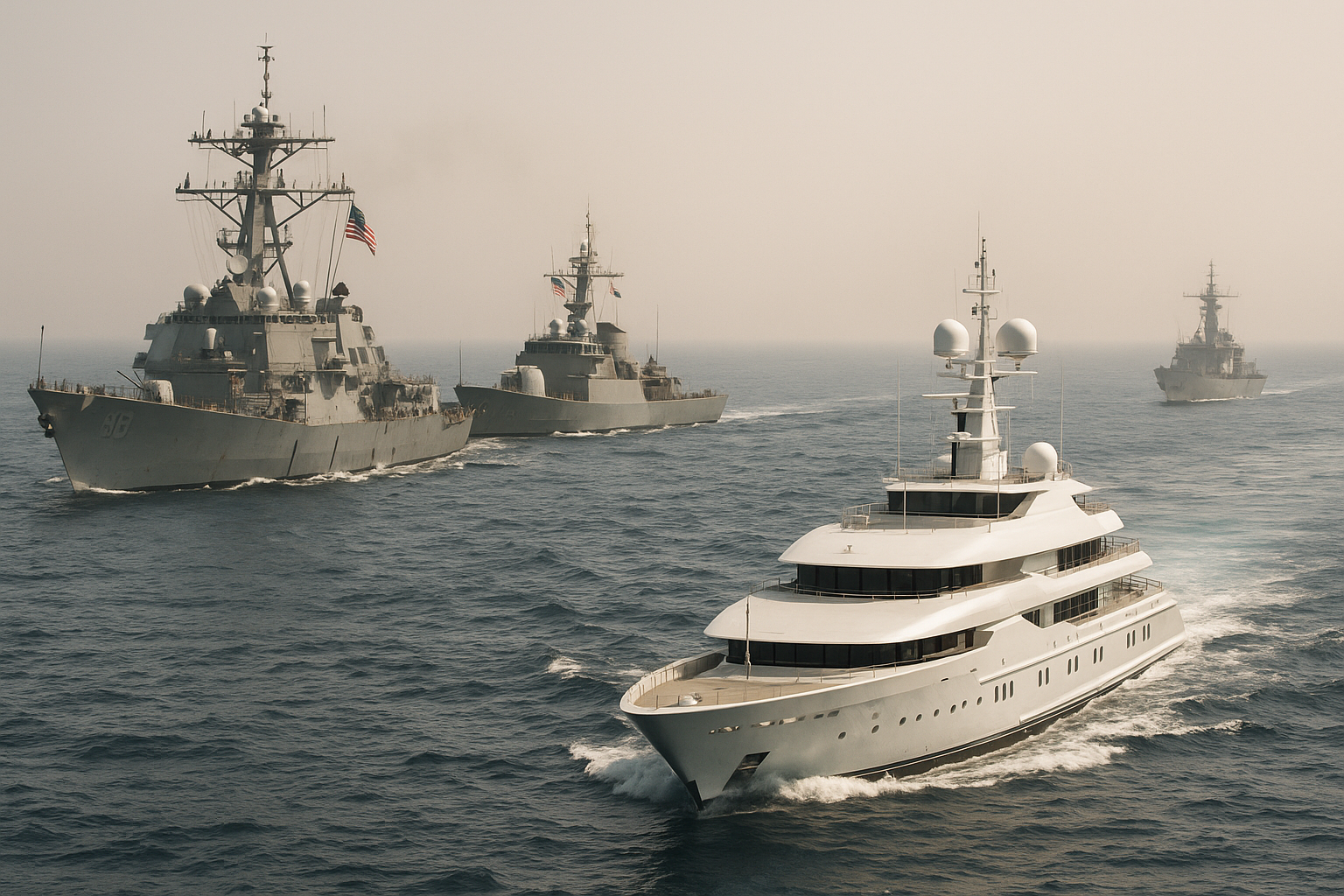
Recent developments in the Iran conflict have heightened concerns over security in the Strait of Hormuz, a critical waterway for global oil shipments. Naval movements and diplomatic warnings underscore the region's volatility.
Key Facts
- The Strait of Hormuz is a vital shipping lane for global oil exports.
- Recent days have seen increased military activity in the region.
- A Russian superyacht linked to a Putin ally sailed through the strait despite US monitoring.
- The US has announced new measures to guide merchant vessels through the area.
- Iran has warned against foreign interference in its territorial waters.
- Merchant vessels have continued to transit the strait amid heightened tensions.
- Diplomatic efforts to de-escalate the situation are ongoing.
Overview
The Strait of Hormuz, a narrow passage connecting the Persian Gulf to the Arabian Sea, is once again at the center of international attention. In recent days, military maneuvers and diplomatic statements have signaled growing unease over the security of this crucial maritime route.
A notable incident involved a $500 million Russian superyacht, reportedly linked to a close ally of Russian President Vladimir Putin, successfully passing through the strait. This occurred despite increased US surveillance and efforts to monitor vessel movements in the area.
The United States has responded by announcing new measures to guide merchant ships safely through the strait, aiming to deter potential threats and ensure the free flow of commerce. Iran, meanwhile, has reiterated its opposition to foreign military presence near its waters, warning of possible consequences.
Despite the tensions, commercial shipping has not halted. Merchant vessels continue to navigate the strait, though under heightened security protocols. The international community is closely watching the situation, with calls for restraint and dialogue to prevent escalation.
The latest developments highlight the strategic importance of the Strait of Hormuz and the risks posed by regional conflicts. As diplomatic efforts continue, the world remains alert to any changes that could impact global energy supplies.
In Depth
The Strait of Hormuz is one of the world's most strategically significant waterways, with roughly a fifth of global oil consumption passing through its narrow channel. Any disruption in this region can have immediate repercussions on international energy markets and global trade.
Recent military activity in and around the strait has raised alarms among shipping companies and governments alike. The passage of a Russian superyacht, reportedly valued at $500 million and linked to a prominent Putin ally, drew particular attention. According to reports, the vessel navigated the strait despite US efforts to monitor and potentially restrict the movement of assets tied to Russian interests.
In response to these developments, the United States announced plans to increase its naval presence and provide guidance to merchant vessels transiting the area. The US Navy has a long-standing role in ensuring the security of the strait, but recent tensions with Iran have complicated these efforts. American officials have emphasized the need to protect international shipping from potential threats, including state and non-state actors.
Iran, for its part, has issued strong statements opposing foreign military operations near its territorial waters. Iranian officials argue that such actions violate their sovereignty and could provoke unintended confrontations. The government in Tehran has also warned that it will respond to any perceived aggression, further raising the stakes in the region.
Despite the rhetoric and military posturing, commercial shipping through the Strait of Hormuz has continued, albeit with increased caution. Shipping companies have implemented additional security measures, and some have altered their routes or schedules to minimize risk. The ongoing situation has prompted renewed calls from the international community for diplomatic engagement and de-escalation.
The broader context includes ongoing disputes between Iran and Western countries over nuclear policy, sanctions, and regional influence. The Strait of Hormuz has often served as a flashpoint in these disputes, given its importance to the global economy. Analysts warn that any miscalculation or incident in the strait could quickly escalate into a wider conflict, with serious consequences for energy markets and regional stability.
As of now, diplomatic channels remain open, and there are ongoing efforts to reduce tensions. However, the situation remains fluid, and the risk of escalation cannot be discounted. Observers continue to monitor developments closely, aware that the security of the Strait of Hormuz is critical not only for the region but for the world at large.
Commonly Asked Questions
Why is the Strait of Hormuz important?
The Strait of Hormuz is a key maritime passage for global oil shipments, with about 20% of the world's oil passing through it. Any disruption can impact global energy prices.
What recent incident drew attention to the strait?
A Russian superyacht linked to a Putin ally sailed through the Strait of Hormuz despite US monitoring, highlighting the region's ongoing tensions.
How has the US responded to recent tensions?
The US has increased its naval presence and announced new measures to guide merchant vessels safely through the strait.
What is Iran's position on foreign military presence?
Iran opposes foreign military operations near its waters, warning that such actions could provoke a response and violate its sovereignty.
Are commercial ships still using the Strait of Hormuz?
Yes, merchant vessels continue to transit the strait, though with heightened security and caution due to the current situation.
Reliability Score
25/100