
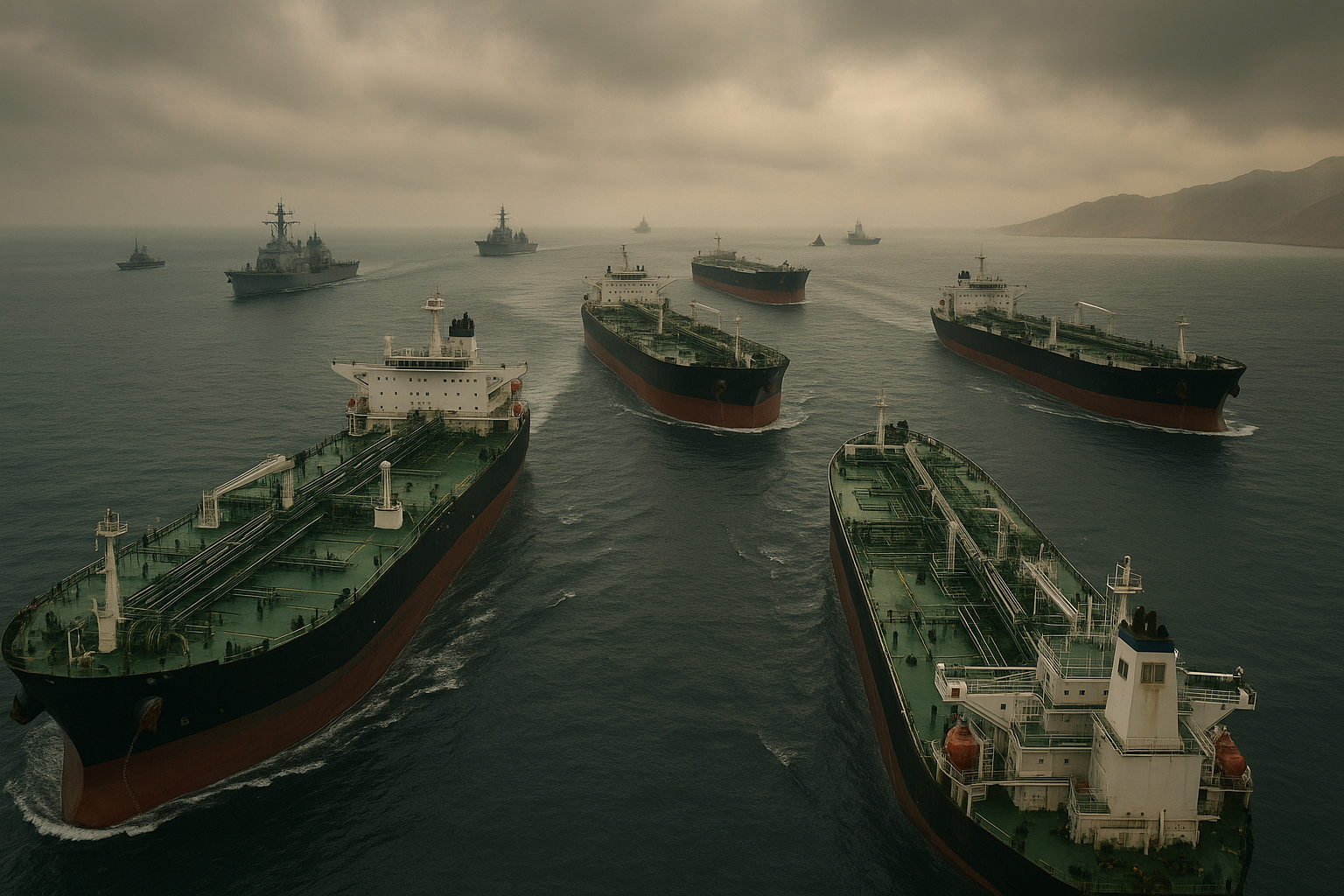
Oil prices are experiencing sharp fluctuations as renewed tensions in the Middle East and disruptions in the Strait of Hormuz unsettle global energy markets.
Key Facts
- Oil prices have swung sharply amid escalating conflict involving Iran in the Middle East.
- The Strait of Hormuz, a critical chokepoint for global oil shipments, has seen disruptions and increased military presence.
- US-led efforts to escort vessels through the strait have contributed to market volatility.
- Brent crude and WTI prices have both experienced significant intraday swings, with Brent holding above $110 per barrel at times.
- Market jitters are heightened by uncertainty over the duration and intensity of the disruptions.
- Gasoline prices in regions like California have surged, reflecting broader supply chain impacts.
- Other commodities, such as gold and silver, have also seen price movements as investors seek safe havens.
- Japan and other major economies are emphasizing energy supply chain resilience in response to the crisis.
Overview
Oil markets are on edge as the conflict between Iran and its regional rivals intensifies, sending ripples through the global commodities landscape. The Strait of Hormuz, through which roughly a fifth of the world’s oil supply passes, has become a focal point for both military activity and market anxiety.
Recent days have seen oil prices swing wildly. Brent crude, the international benchmark, has at times held above $110 per barrel, while US West Texas Intermediate (WTI) has also experienced sharp intraday moves. The volatility is being driven by uncertainty over the security of oil shipments and the potential for further escalation in the region.
The United States has responded by increasing naval escorts for commercial vessels navigating the strait, aiming to ensure the continued flow of oil. However, traders remain wary, with each new development—be it a military skirmish or diplomatic overture—prompting immediate reactions in the market.
The impact is not limited to crude oil. Gasoline prices in the US, particularly in California, have surged, and other commodities such as gold and silver have also seen price swings as investors look for safe havens. Major economies like Japan are now prioritizing energy supply chain resilience, underscoring the far-reaching effects of the crisis.
As the situation evolves, analysts warn that oil prices could remain highly volatile. The world’s attention is fixed on the Strait of Hormuz, where any disruption has the potential to reverberate through economies and households worldwide.
In Depth
The Strait of Hormuz remains one of the most strategically significant waterways on the planet. Approximately 20% of global oil consumption passes through this narrow channel, making it a critical artery for energy supplies to Asia, Europe, and beyond. Any threat to its security immediately raises concerns about global supply shortages and price spikes.
In the current crisis, Iranian military actions and threats to shipping have led to heightened risk premiums in oil markets. Reports indicate that US-flagged vessels have faced challenges transiting the strait, prompting the US and its allies to organize naval escorts. While these efforts have helped some tankers pass safely, the overall environment remains tense and unpredictable.
Oil prices initially surged on news of the disruptions, with Brent crude briefly topping $110 per barrel. However, subsequent reports of successful US-led convoys and diplomatic efforts have led to sharp pullbacks, highlighting the market’s sensitivity to real-time developments. Traders are closely monitoring both military maneuvers and statements from key stakeholders, including OPEC members and Western governments.
The volatility has spilled over into other commodities. Gold, traditionally a safe haven during geopolitical crises, has seen both gains and declines as investors weigh the risks. Silver and other metals have also been affected, with inflation fears and shifting risk appetites influencing trading patterns.
Gasoline prices have climbed in several US regions, most notably in California, where average prices have surpassed $6 per gallon. This reflects not only the direct impact of crude oil volatility but also broader concerns about supply chain disruptions and refining capacity.
Major economies are responding by reassessing their energy security strategies. Japan, for example, has emphasized the need to strengthen supply chain resilience for both energy and critical materials. These moves signal a broader shift toward diversification and risk management in the face of persistent geopolitical uncertainty.
Looking ahead, analysts caution that the situation remains fluid. The potential for further escalation in the Middle East, or for a diplomatic breakthrough, could send oil prices sharply higher or lower. For now, the market remains highly reactive, with the Strait of Hormuz at the center of global attention.
Commonly Asked Questions
Why is the Strait of Hormuz so important for oil markets?
The Strait of Hormuz is a narrow waterway through which about 20% of the world’s oil supply passes. Any disruption there can significantly impact global oil prices and supply.
How have oil prices responded to the recent Middle East tensions?
Oil prices have experienced sharp fluctuations, with Brent crude at times holding above $110 per barrel, as traders react to news of disruptions and military activity in the region.
What measures are being taken to secure oil shipments?
The US and allied navies have increased their presence in the Strait of Hormuz, escorting commercial vessels to ensure the continued flow of oil despite threats and disruptions.
How are other commodities being affected?
Gold and silver have seen price swings as investors seek safe havens, while gasoline prices have surged in some regions due to supply chain concerns.
What are major economies doing in response to the crisis?
Countries like Japan are emphasizing the need for greater supply chain resilience in energy and critical materials, aiming to reduce vulnerability to future disruptions.
Reliability Score
96/100
Sources
- CNBC: Oil slides as traders assess Middle East developments with Iran attacks keeping markets jittery – CNBC
- RT News: Crude oil price steadies amid US-Iran war uncertainty. Where's it headed in near term? – MSN
- DW: California gas prices top $6 as Midwest hits records – MSN
- Financial Times: Gold extends declines as escalating Middle East tensions lift the US Dollar. – FXStreet
- Associated Press: Japan emphasizes enhancing supply chain resilience in energy, critical materials – Anadolu Ajansı
- Anadolu Agency: Oil prices up as US escort plan, Iran threats fuel Strait of Hormuz concerns – Anadolu Ajansı