
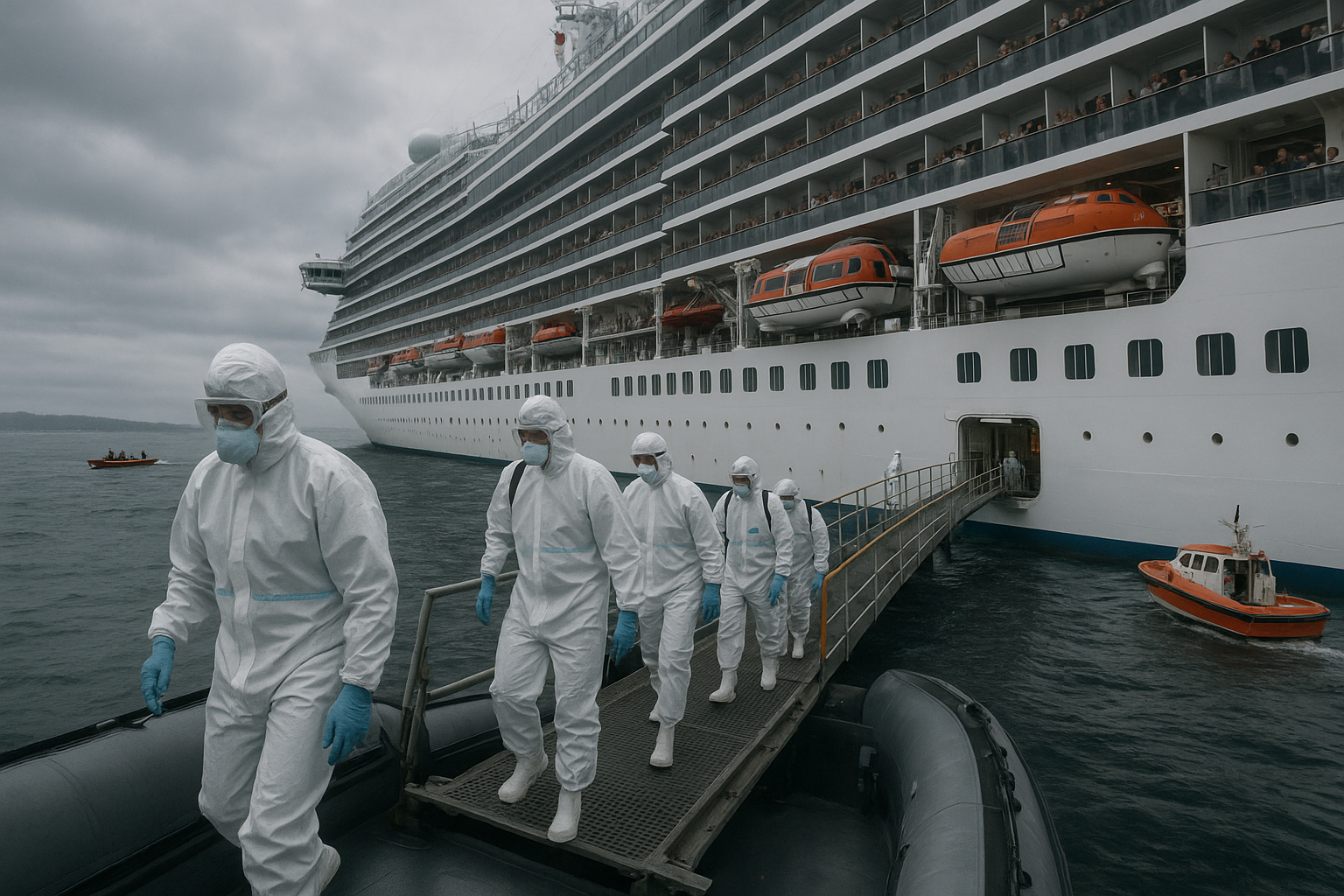
A cruise ship that recently stopped in Argentina is at the center of a suspected hantavirus outbreak, with three passengers dead and dozens more under medical observation as authorities coordinate an emergency response.
Key Facts
- A cruise ship with over 150 people on board is quarantined off Cape Verde after a suspected hantavirus outbreak.
- The vessel had recently made a stop in Argentina before continuing its Atlantic route.
- Three passengers have died, and several others are showing symptoms consistent with hantavirus infection.
- The World Health Organization (WHO) and local health authorities are coordinating evacuation and containment efforts.
- Hantavirus is a rare but potentially deadly virus, typically transmitted by contact with rodent droppings or urine.
- All passengers and crew are being monitored, with some requiring hospitalization.
- The outbreak has prompted international concern and a review of health protocols for cruise ships.
- Investigations are ongoing to determine the source of the infection and prevent further spread.
Overview
A cruise ship journey that included a stop in Argentina has turned into a public health emergency after a suspected hantavirus outbreak left three passengers dead. The vessel, currently anchored off Cape Verde, remains under quarantine as health officials rush to contain the situation.
The outbreak was first detected when several passengers began exhibiting symptoms such as fever, muscle aches, and respiratory distress—signs consistent with hantavirus infection. The World Health Organization has confirmed the deaths and is working closely with local authorities to manage the crisis.
With over 150 people on board, including passengers and crew, the ship is now the focus of an international response. Medical teams in protective gear have boarded the vessel to assess and treat those affected, while plans are underway to evacuate the most seriously ill.
Hantavirus is a rare but serious disease, most often contracted through exposure to infected rodents or their droppings. While outbreaks are uncommon, the virus can cause severe respiratory illness and has a high mortality rate if not treated promptly.
The cruise ship had recently docked in Argentina, raising questions about the possible source of the infection. Investigations are ongoing, and all passengers are being closely monitored for symptoms. The incident has prompted a review of health and safety protocols for cruise travel, especially on routes passing through South America.
Authorities are urging calm but remain vigilant as they work to prevent further spread of the virus. The situation underscores the challenges of managing infectious diseases in closed environments like cruise ships, where rapid transmission can occur.
In Depth
The suspected hantavirus outbreak on the cruise ship has drawn attention from global health agencies due to the unusual circumstances and the potential for rapid transmission in a confined setting. According to the World Health Organization, three passengers have died, and several others are under close observation or have been hospitalized. The ship, which had recently stopped in Argentina, is currently anchored off Cape Verde, with over 150 people on board.
Hantavirus infections are rare but can be severe, leading to hantavirus pulmonary syndrome (HPS), which is characterized by flu-like symptoms that can progress to life-threatening respiratory distress. The virus is typically transmitted to humans through inhalation of aerosolized particles from rodent urine, droppings, or saliva. Human-to-human transmission is extremely rare, but the close quarters of a cruise ship can facilitate rapid spread if contaminated materials are present.
The cruise ship's itinerary included a stop in Argentina, a country where hantavirus is known to occur, particularly in rural or forested areas. However, it remains unclear whether the infection originated during the Argentina stop or elsewhere along the route. Health authorities are conducting thorough investigations, including environmental sampling and interviews with passengers and crew, to identify the source and mode of transmission.
In response to the outbreak, local health officials and the WHO have implemented strict quarantine measures. Medical teams equipped with personal protective equipment (PPE) have boarded the ship to assess the health status of all individuals on board. Those exhibiting symptoms are being isolated and treated, while asymptomatic passengers are under regular monitoring. Plans are underway to evacuate the most seriously ill to shore-based medical facilities for advanced care.
The incident has reignited concerns about the vulnerability of cruise ships to infectious disease outbreaks. In recent years, cruise vessels have faced challenges containing norovirus, COVID-19, and other pathogens due to the high density of passengers and shared facilities. The current situation has prompted calls for enhanced health screening, improved sanitation protocols, and better communication between cruise operators and health authorities.
Experts emphasize that while hantavirus outbreaks are rare, the risk is heightened in environments where rodent exposure is possible. Passengers who disembarked in Argentina may have visited areas where the virus is endemic, although no definitive link has yet been established. The investigation is ongoing, and authorities are urging anyone who was on the ship or in contact with passengers to be alert for symptoms and seek medical attention if necessary.
As the emergency response continues, the cruise industry faces renewed scrutiny over its preparedness for health crises. The outcome of the investigation and the effectiveness of containment measures will likely influence future policies for cruise travel, particularly in regions with known infectious disease risks.
Commonly Asked Questions
What is hantavirus and how is it transmitted?
Hantavirus is a rare virus primarily transmitted to humans through inhalation of particles from rodent urine, droppings, or saliva. Human-to-human transmission is extremely rare.
How many people have died in the suspected outbreak on the cruise ship?
Three passengers have died as a result of the suspected hantavirus outbreak on the cruise ship.
Where did the cruise ship travel before the outbreak was detected?
The cruise ship had recently made a stop in Argentina before continuing its journey across the Atlantic.
What measures are being taken to contain the outbreak?
The ship is under quarantine, medical teams are treating and monitoring all passengers and crew, and plans are in place to evacuate those in serious condition.
Are other passengers at risk, and what should they do?
All passengers and crew are being closely monitored for symptoms. Anyone who develops fever, muscle aches, or respiratory issues should seek immediate medical attention.
Reliability Score
98/100
Sources
- Associated Press: Evacuations planned as suspected hantavirus outbreak traps 150 on ship off Cape Verde – Reuters
- Financial Times: A cruise ship is waiting for help after a suspected outbreak of the rare hantavirus killed 3 – WHEC.com
- Jerusalem Post: WHO: Three dead in suspected hantavirus outbreak on cruise ship – The Jerusalem Post
- RT News: What to know about hantavirus, the illness suspected in a cruise ship outbreak – Hartford Courant
- The Atlantic: What to know about hantavirus, suspected virus outbreak on Atlantic cruise ship – MyJoyOnline
- CNN: Three cruise ship passengers dead, others ill after suspected hantavirus outbreak. Here’s what we know – CNN
- Reuters: Three cruise ship passengers die in suspected hantavirus outbreak – Reuters
- The New York Times: 3 Dead in Hantavirus Outbreak Aboard Cruise Ship, W.H.O. Says – The New York Times