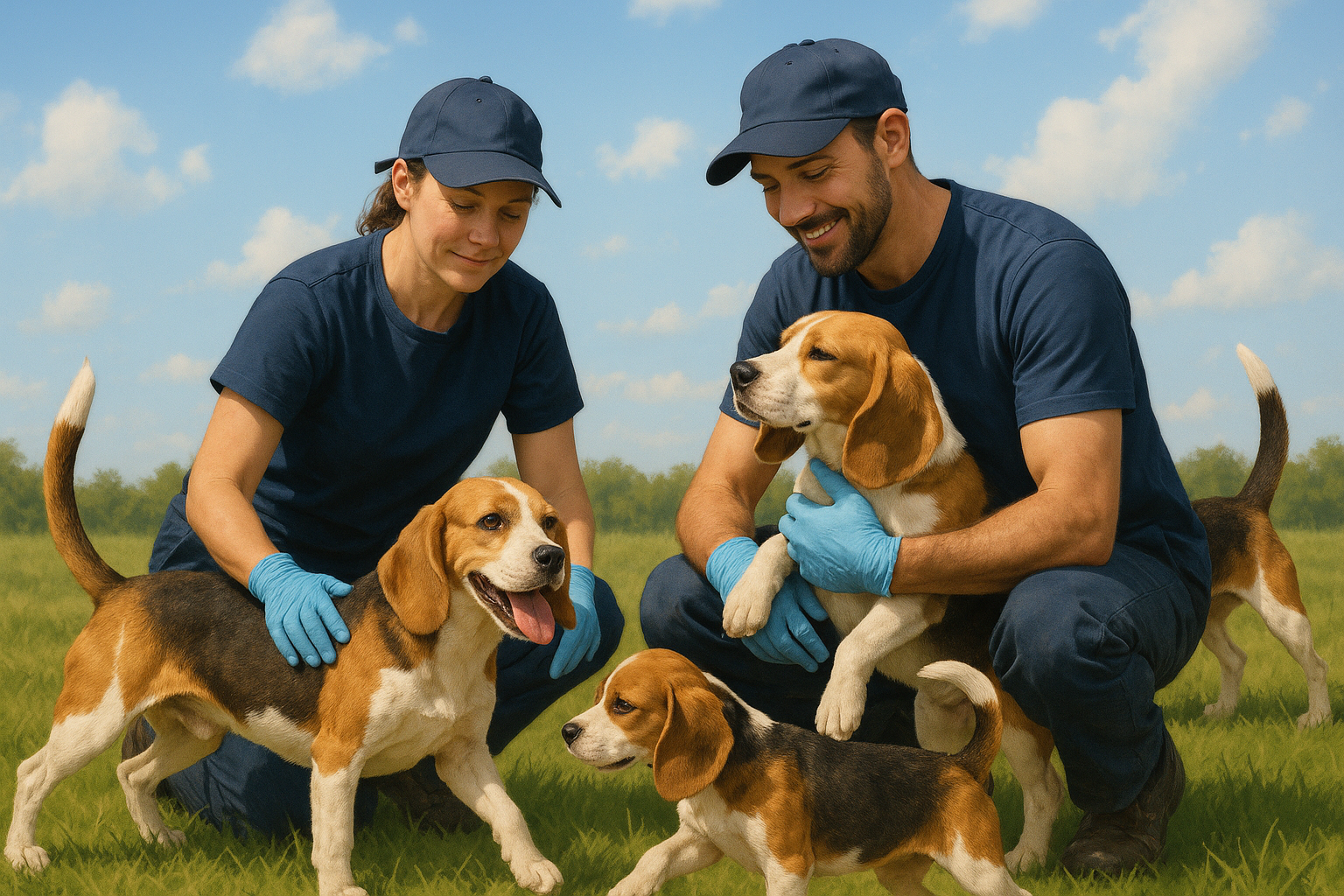

In a major animal welfare operation, 1,500 beagles have been rescued from a Wisconsin research facility and are being rehomed across the United States, offering them a chance at a new life.
Key Facts
- 1,500 beagles were released from Ridglan Farms, a research facility in Wisconsin.
- The rescue was coordinated by multiple animal welfare organizations.
- The beagles are being transported to shelters and rescues across the U.S. for adoption.
- Many of the dogs had never experienced life outside a kennel.
- The operation followed a deal between the facility and rescue groups.
- Volunteers and staff are working to socialize and care for the dogs.
- The beagles are undergoing health checks and behavioral assessments before adoption.
- The rescue highlights ongoing concerns about the use of animals in research.
Overview
A massive animal rescue effort is underway as 1,500 beagles are freed from a Wisconsin research facility. The dogs, previously used for research purposes, are now being given a second chance at life thanks to the work of animal welfare groups and volunteers.
The beagles are being transported to shelters and rescues across the country, where they will be cared for and prepared for adoption. Many of these dogs have spent their entire lives in kennels, unfamiliar with the comforts of a home or the affection of a family.
Animal welfare organizations are stepping in to provide medical care, behavioral support, and socialization for the rescued beagles. The goal is to help each dog adjust to a new environment and find a loving family.
This large-scale rescue was made possible by a deal struck between Ridglan Farms and several rescue groups. The operation has drawn attention to the ongoing debate about the use of animals in research and the importance of rehoming animals once their time in laboratories ends.
Volunteers are working tirelessly to ensure the dogs receive the attention and care they need. The hope is that, soon, all 1,500 beagles will be able to enjoy the simple pleasures of a safe home, warm bed, and caring human companions.
In Depth
The rescue of 1,500 beagles from Ridglan Farms in Wisconsin marks one of the largest animal welfare operations of its kind in recent years. Ridglan Farms, which bred and supplied beagles for research laboratories, agreed to release the dogs after negotiations with animal rescue organizations. The decision followed growing public concern and advocacy around the ethical treatment of animals used in scientific research.
Animal welfare groups, including national and regional rescues, coordinated the complex logistics required to transport such a large number of dogs. The beagles are being sent to shelters and foster homes across the United States, from Florida to California. Each dog is receiving a thorough health check, vaccinations, and behavioral assessments to determine their needs and readiness for adoption.
Many of the beagles have never experienced life outside a kennel. Volunteers and staff are introducing them to basic comforts such as soft beds, toys, and outdoor play. Socialization is a key focus, as the dogs must learn to trust humans and adapt to new environments. Some may require extra patience and training due to their backgrounds.
The rescue has highlighted the ongoing debate about the use of animals in research. While research facilities are required to follow federal regulations, animal welfare advocates argue that more should be done to reduce reliance on animal testing and to ensure the humane treatment of animals when their research use ends. The successful rehoming of these beagles demonstrates the capacity of rescue organizations to provide positive outcomes for former research animals.
Public response to the rescue has been overwhelmingly supportive, with many individuals expressing interest in adopting or fostering the beagles. Shelters are carefully screening potential adopters to ensure the dogs are placed in safe, loving homes. The operation also underscores the importance of collaboration between research facilities, animal welfare groups, and the broader community in addressing animal welfare challenges.
As the beagles settle into their new lives, animal advocates hope their stories will inspire further reforms in animal research and promote greater awareness of the needs of all animals in laboratory settings. The rescue serves as a reminder of the resilience of animals and the transformative power of compassion and community action.
Commonly Asked Questions
Why were the beagles kept at the research facility?
The beagles were bred and kept at Ridglan Farms to be used in scientific research, as their temperament and size make them common subjects for laboratory studies.
How were the beagles rescued?
Animal welfare organizations negotiated with the research facility to secure the release of the dogs, then coordinated their transport to shelters and rescues nationwide.
What happens to the beagles now?
The beagles are receiving medical care, behavioral assessments, and socialization before being made available for adoption into loving homes.
Can members of the public adopt these beagles?
Yes, many of the rescued beagles will be available for adoption through participating shelters and rescue groups after they are assessed and prepared for home life.
What does this rescue mean for animal welfare?
The rescue highlights the importance of rehoming animals used in research and brings attention to broader animal welfare issues related to laboratory testing.
Reliability Score
61/100
Sources
- ABC News: 1,500 beagles will get new lives, warm laps after release from research facility – ABC News – Breaking News, Latest News and Videos
- TIME: 1,500 beagles will get new lives, warm laps after release from research facility – Times West Virginian
- Fox News: Ridglan Farms beagles begin leaving Wisconsin facility after rescue groups strike deal for release – Fox News