
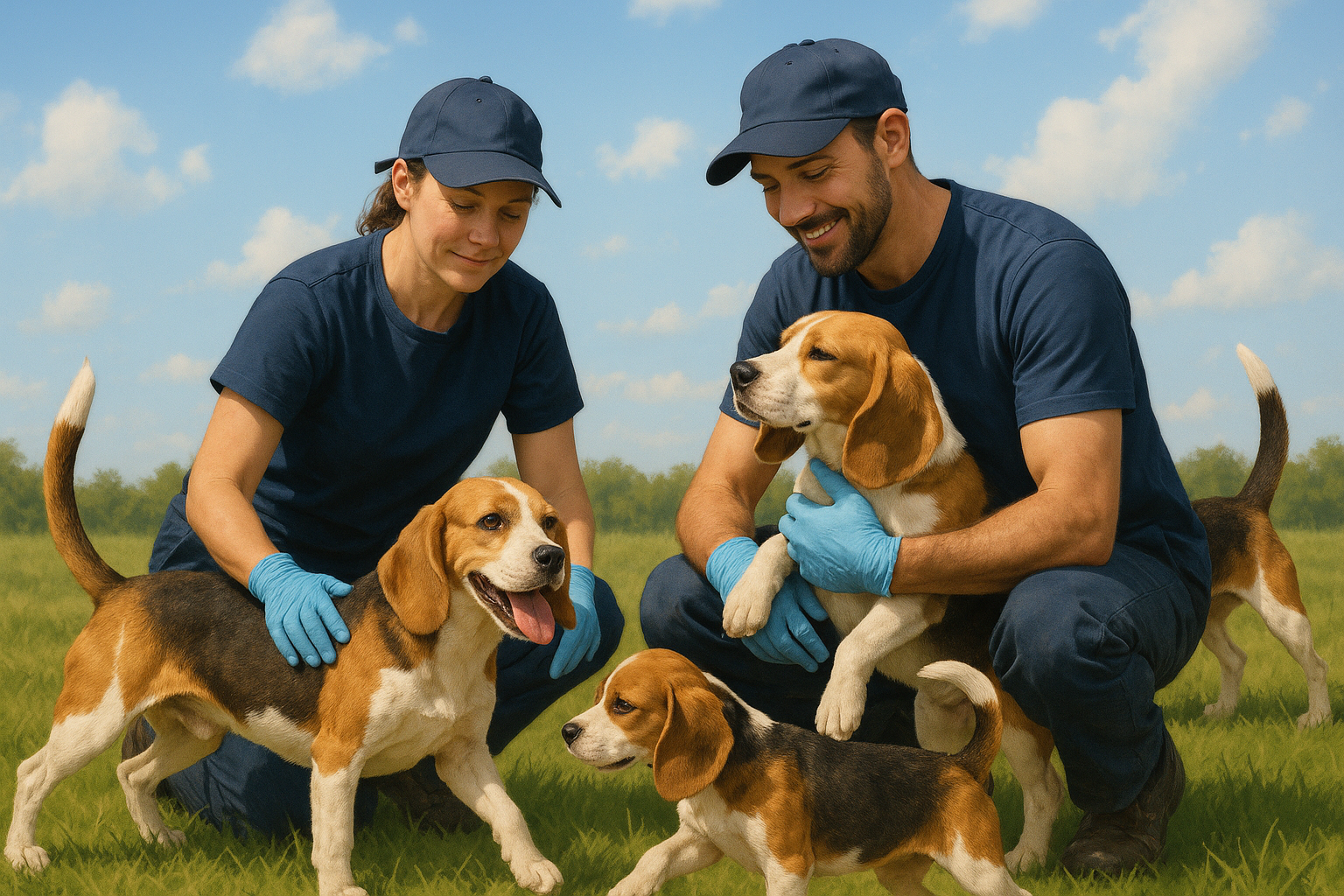
In a major animal welfare operation, 1,500 beagles have been rescued from a Wisconsin research facility and are now being rehomed by rescue organizations across the country.
Key Facts
- 1,500 beagles were released from a research facility in Wisconsin.
- The rescue followed an agreement between the facility and animal welfare groups.
- Beagles are being transported to shelters and rescue organizations nationwide.
- Many of the dogs are being placed in foster care before adoption.
- The operation involved coordination among multiple animal rescue groups.
- The beagles had previously been bred for research purposes.
- Animal welfare advocates have praised the rescue as a significant achievement.
- The dogs are undergoing health checks and socialization before rehoming.
Overview
A large-scale rescue operation has given 1,500 beagles a second chance at life. The dogs, previously housed at a Wisconsin research facility, are now on their way to new homes thanks to the efforts of animal welfare organizations.
The beagles were released after rescue groups reached an agreement with the facility. Animal advocates and volunteers quickly mobilized to transport the dogs to shelters and foster homes across the United States.
Many of the rescued beagles are experiencing life outside of a kennel for the first time. Rescue workers are providing medical care, socialization, and plenty of affection to help the dogs adjust.
The operation has drawn widespread attention and praise from animal welfare supporters. For the beagles, it marks the beginning of a new chapter—one filled with comfort, care, and the promise of a loving family.
In Depth
The rescue of 1,500 beagles from Ridglan Farms, a Wisconsin-based research breeding facility, represents one of the largest dog rescue efforts in recent U.S. history. The operation was made possible after animal welfare organizations negotiated the release of the dogs, who had been bred for use in scientific research. According to reports from the Associated Press and Fox News, the agreement allowed rescue groups to begin removing the dogs from the facility in phases, ensuring their safe transition to new environments.
Logistics for the rescue were complex, requiring coordination among national and local animal welfare organizations. Shelters and rescue groups from various states, including Florida and others, stepped in to receive the beagles. Many of the dogs are being placed in foster care, where they can acclimate to home life and receive individualized attention before being made available for adoption.
The beagles are undergoing thorough veterinary examinations and behavioral assessments. For many, this is their first experience with basic comforts such as soft bedding, toys, and outdoor play. Volunteers are working to socialize the dogs, helping them overcome the anxiety and unfamiliarity that often comes with leaving a kennel environment.
Animal welfare advocates have highlighted the significance of this rescue, both for the individual dogs and as a broader statement about the treatment of animals in research. While the use of animals in research remains a contentious issue, the successful rehoming of these beagles demonstrates the capacity of rescue organizations to provide alternatives and new beginnings for animals in need.
The story has resonated with the public, as evidenced by widespread media coverage and a surge in interest from potential adopters. Rescue groups are encouraging those interested in adopting to be patient, as the process of preparing the dogs for new homes takes time. The ultimate goal is to ensure that each beagle finds a safe, loving environment where they can thrive.
This operation also underscores the importance of collaboration between research facilities and animal welfare organizations. By working together, they can create pathways for animals to leave laboratory settings and enter homes where their well-being is prioritized. As the beagles settle into their new lives, their journey serves as a reminder of the impact that coordinated rescue efforts can have on animal welfare.
Commonly Asked Questions
Why were the beagles at the research facility?
The beagles were bred and housed at the Wisconsin facility for use in scientific research.
How were the beagles rescued?
Animal welfare organizations negotiated an agreement with the facility, allowing the dogs to be released and transported to shelters and rescues.
What happens to the beagles now?
The beagles are being placed in foster care or shelters, receiving medical care and socialization before being adopted into permanent homes.
Can people adopt one of the rescued beagles?
Yes, many of the beagles will be available for adoption through participating rescue organizations once they are ready.
Why is this rescue significant?
This is one of the largest dog rescues from a research facility in the U.S., highlighting the potential for collaboration to improve animal welfare.
Reliability Score
59/100