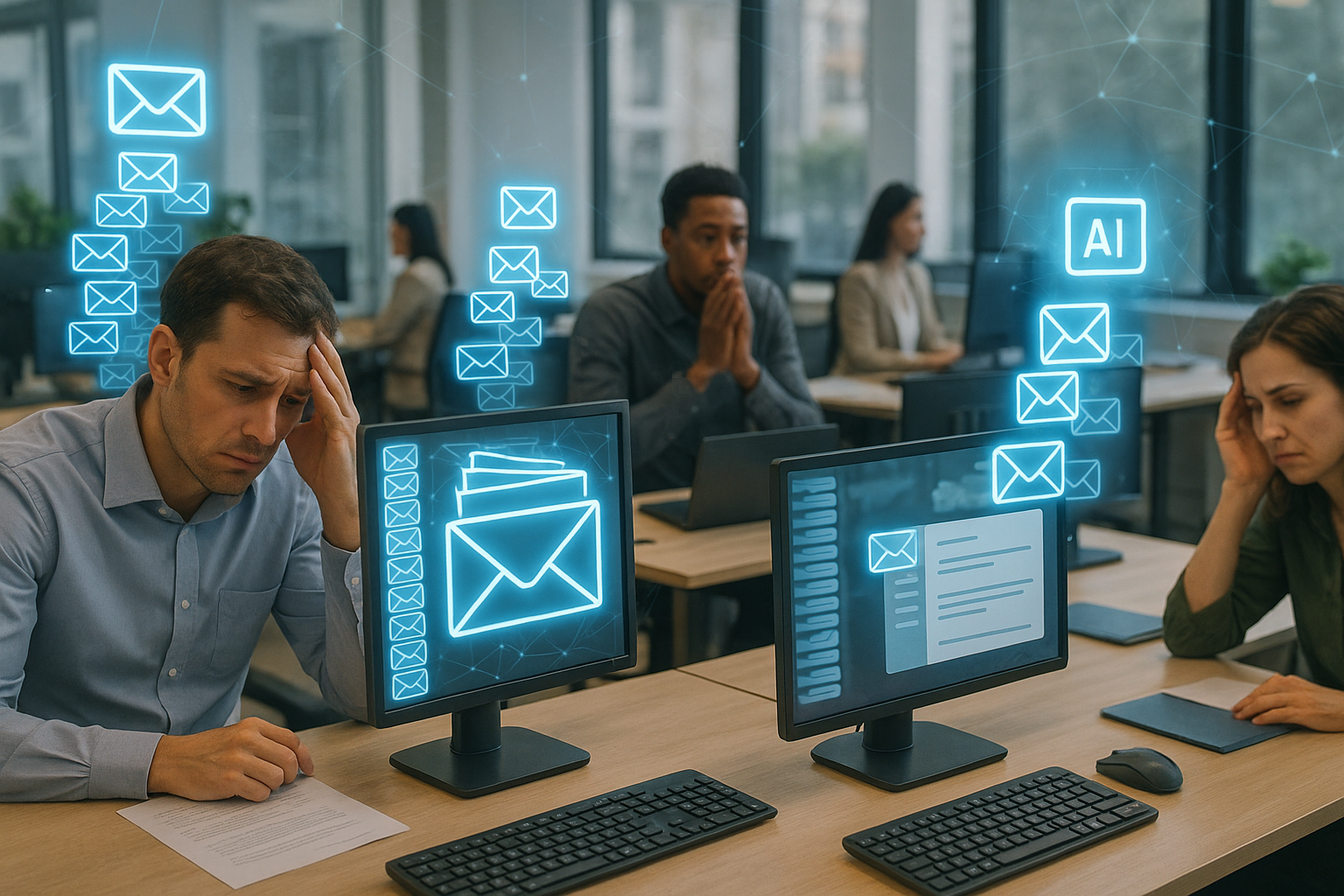
AI tools are increasingly used to draft workplace emails, but new research and expert opinion suggest this trend may be causing more inefficiency, not less.
Key Facts
- AI-generated emails are being widely adopted in workplaces to save time.
- Some experts warn that AI-written emails can increase email volume and redundancy.
- A TIME report highlights concerns that AI tools may create more work by generating unnecessary messages.
- McKinsey & Company forecasts that AI will be deeply integrated into workplace communication by 2025.
- Accenture's rollout of Microsoft Copilot raised concerns about workforce adaptation and productivity.
- AI-generated emails may lack nuance, leading to misunderstandings and follow-up clarifications.
- The promise of efficiency is sometimes offset by the need for human oversight and editing.
- Workplace leaders are urged to balance AI adoption with clear communication strategies.
Overview
AI-powered tools are now drafting emails for millions of workers, promising to save time and streamline communication. However, recent reports and expert commentary suggest that this technology may be having the opposite effect. Instead of reducing workloads, AI-generated emails can flood inboxes with redundant or unnecessary messages, creating more tasks for employees.
A TIME article highlights how AI-written emails often include excessive recipients or formalities, leading to longer email threads and more follow-up questions. As companies like Accenture roll out AI tools such as Microsoft Copilot, some employees report that the volume of internal communication has increased, not decreased.
McKinsey & Company projects that AI will be a standard part of workplace communication by 2025. Yet, the transition is not without challenges. AI-generated messages can lack the subtlety and context that human-written emails provide, sometimes resulting in misunderstandings that require additional clarification.
Experts recommend that organizations carefully monitor how AI tools are used for communication. While automation can help with routine tasks, over-reliance on AI may undermine productivity if not managed properly. The key, they say, is to strike a balance between efficiency and thoughtful, clear communication.
In Depth
The integration of AI into workplace communication systems is accelerating, with tools like Microsoft Copilot and Google Workspace AI features being adopted by major corporations. The rationale is straightforward: AI can draft, summarize, and respond to emails faster than humans, freeing up time for more valuable work. However, as reported by TIME and echoed by consulting firms like McKinsey & Company, the reality is more complex.
One major concern is the proliferation of unnecessary emails. AI tools, designed to be helpful, often err on the side of inclusivity—adding extra recipients, CCs, and formal language. This can result in longer email chains and more people being looped into conversations that may not require their input. Employees then spend additional time sorting through messages, clarifying intent, or correcting AI-generated errors.
Accenture’s recent deployment of Copilot illustrates both the promise and pitfalls of AI in communication. While some employees appreciate the speed and consistency of AI-drafted emails, others find themselves editing or rewriting messages to ensure accuracy and appropriateness. This editing process can negate the time savings promised by automation.
Another issue is the lack of nuance in AI-generated communication. Human-written emails often rely on context, tone, and subtle cues to convey meaning. AI, while improving, can still misinterpret these elements, leading to misunderstandings or even offense. For example, an AI might generate a message that is overly formal or inadvertently insensitive, requiring follow-up explanations.
McKinsey’s research suggests that by 2025, AI will be ubiquitous in workplace communication. However, the firm also notes that successful integration depends on clear guidelines and ongoing human oversight. Without these, organizations risk creating more work for employees instead of less.
Experts recommend that companies establish best practices for AI-generated communication. This includes training employees to review and edit AI drafts, setting limits on automated email generation, and encouraging direct, concise messaging. Ultimately, AI can be a powerful tool, but only when used thoughtfully and in conjunction with human judgment.
Commonly Asked Questions
How do AI-generated emails increase workplace inefficiency?
AI-generated emails can lead to higher email volume, redundant messages, and misunderstandings that require additional clarification, ultimately increasing the workload for employees.
What are the main concerns raised by experts about AI-written emails?
Experts are concerned that AI-written emails often lack nuance, include unnecessary recipients, and may create more work by generating messages that require human review or correction.
Are there benefits to using AI for workplace emails?
Yes, AI can help draft routine messages quickly and ensure consistency, but these benefits are best realized when combined with human oversight and clear communication policies.
What steps can organizations take to avoid inefficiency with AI email tools?
Organizations should set guidelines for AI use, train employees to review AI drafts, and monitor the impact of AI-generated communication to ensure it supports, rather than hinders, productivity.
Will AI replace human-written emails entirely?
It is unlikely that AI will fully replace human-written emails, as human judgment and context remain essential for effective workplace communication.
Reliability Score
70/100