
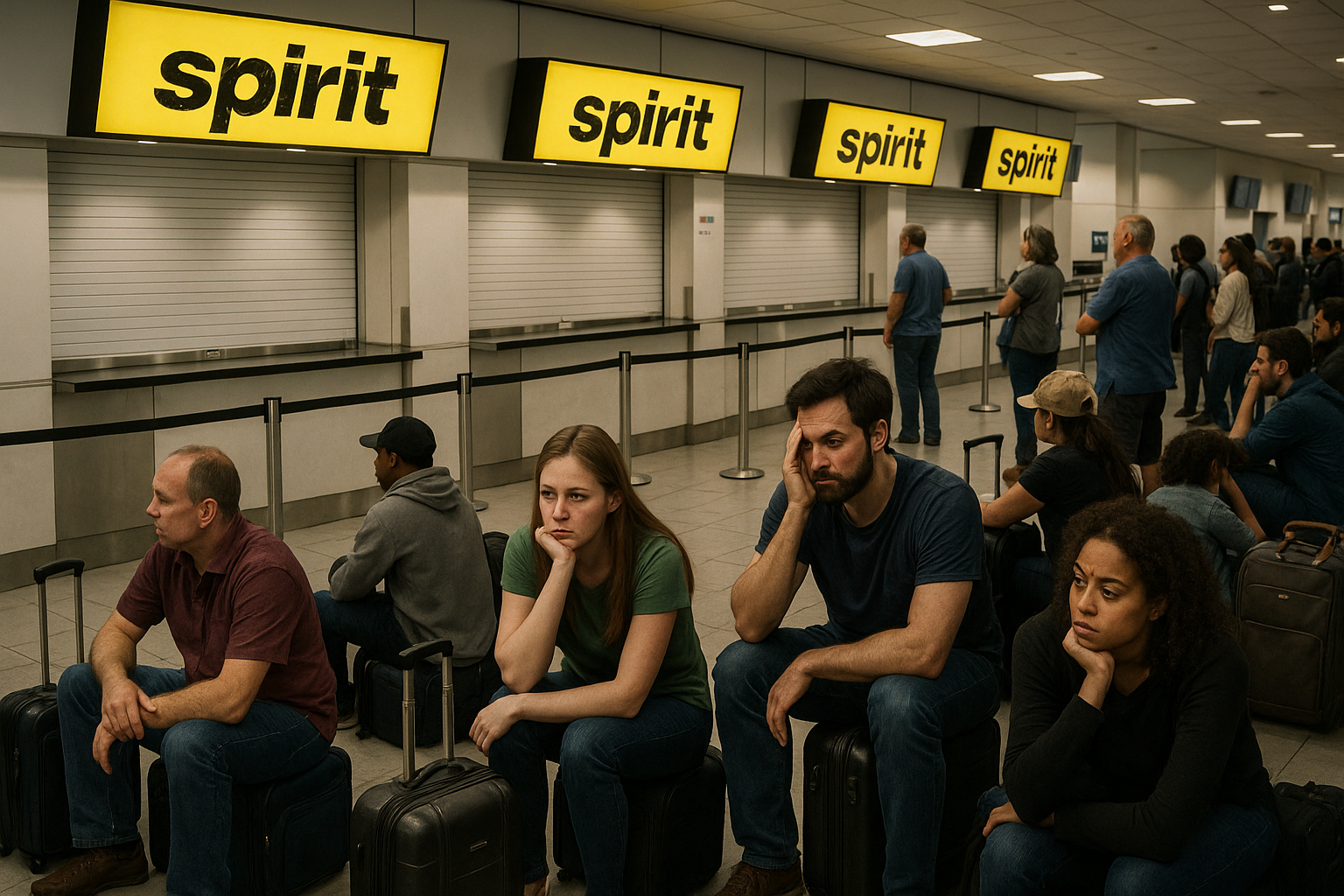
Spirit Airlines has abruptly ceased operations, leaving thousands of travelers stranded at airports across the United States and Central America. The sudden shutdown ends the carrier’s 34-year run and has caused widespread disruption.
Key Facts
- Spirit Airlines has shut down all operations, ending 34 years in business.
- Thousands of passengers were left stranded at airports in the U.S. and Central America.
- The closure affected major airports, including George Bush Intercontinental and Las Vegas.
- Travelers reported confusion, long waits, and limited rebooking options.
- Spirit Airlines was known as a major U.S. ultra-low-cost carrier.
- The shutdown was abrupt, with little advance notice to customers.
- Affected passengers are seeking refunds and alternative travel arrangements.
- The airline’s closure has sparked calls for improved passenger protections.
Overview
Spirit Airlines, once a staple of budget air travel in the United States, has abruptly ceased all operations. The sudden shutdown has left thousands of passengers stranded at airports from Houston to Las Vegas and as far as Central America. Many travelers arrived at airports to find closed check-in counters and no clear information about their flights.
The airline’s collapse marks the end of a 34-year run. Spirit, known for its ultra-low-cost fares, was a popular choice for price-conscious travelers. Its closure has caused widespread confusion and frustration, with passengers scrambling to find alternative ways home.
Major airports, including George Bush Intercontinental in Houston, reported large crowds of stranded Spirit customers. Some passengers described waiting for hours with little guidance from staff. Others struggled to rebook flights on other airlines, often at much higher prices.
The shutdown has reignited debate about airline consumer protections. Many affected travelers are demanding refunds and better support in the wake of the disruption. The abrupt nature of the closure has highlighted the vulnerability of passengers when airlines suddenly go out of business.
In Depth
Spirit Airlines’ sudden shutdown has sent shockwaves through the travel industry and left a significant logistical challenge for airports and passengers alike. The airline, which began operations in 1990, had grown to become one of the largest ultra-low-cost carriers in the United States. Its business model relied on offering low base fares and charging for extras, attracting millions of budget-conscious travelers each year.
The closure was announced with little warning. Passengers at airports such as George Bush Intercontinental in Houston and McCarran International in Las Vegas reported arriving for scheduled flights only to find Spirit’s check-in desks shuttered and staff unavailable. Many travelers expressed frustration at the lack of communication and support, with some saying they had no way to return home. The disruption extended beyond U.S. borders, affecting Spirit’s international routes in Central America, where travelers faced similar confusion and delays.
Airports scrambled to manage the influx of stranded passengers. Some provided additional staff to help redirect travelers and answer questions, while others coordinated with other airlines to accommodate those affected. However, rebooking options were often limited, and many passengers faced steep price increases for last-minute tickets on other carriers.
The shutdown has prompted renewed scrutiny of airline regulations and consumer protections. Advocacy groups and some lawmakers are calling for stronger safeguards to ensure passengers are not left without recourse when airlines collapse. Refunds, travel vouchers, and assistance with rebooking are among the measures being discussed.
Spirit’s closure also raises questions about the stability of the ultra-low-cost airline sector. The company had faced financial pressures in recent years, including rising fuel costs and increased competition. While the exact reasons for the shutdown have not been detailed, the impact on travelers is clear: thousands have been left stranded, with many still seeking answers and solutions.
As the industry reacts, the focus remains on helping affected passengers reach their destinations and on preventing similar disruptions in the future. The Spirit Airlines shutdown serves as a stark reminder of the challenges travelers can face when an airline suddenly ceases operations.
Commonly Asked Questions
Why did Spirit Airlines shut down?
Spirit Airlines ceased operations due to financial difficulties and market pressures. The company has not released a detailed public explanation, but industry analysts cite rising costs and increased competition as contributing factors.
How many passengers were affected by the shutdown?
Thousands of passengers were left stranded at airports across the United States and Central America following the abrupt shutdown.
What should stranded passengers do now?
Affected travelers are advised to contact Spirit Airlines for refund information and check with other airlines for rebooking options. Airports may also provide assistance or guidance.
Are passengers entitled to refunds?
Passengers with unused tickets are generally entitled to refunds when an airline ceases operations. Spirit Airlines has stated it will provide information on refund procedures.
What impact does this have on the airline industry?
Spirit’s shutdown highlights the volatility of the ultra-low-cost carrier sector and has renewed calls for stronger consumer protections in the event of airline failures.
Reliability Score
96/100
Sources
- Financial Times: Spirit Airlines Passengers Stranded at Airports After Airline's Total Shutdown: 'I Don't Have a Way Back Home' – People.com
- Associated Press: Spirit Airlines collapse strands thousands and ends 34-year run – MSN
- RT News: Spirit Airlines closure leaves passengers stranded at George Bush Intercontinental Airport – 12newsnow.com
- USA Today: Spirit Airlines shuts down, leaving passengers scrambling – USA Today
- TIME: Spirit Airlines Shutdown Strands Central America Travelers – The Tico Times